The Lancet Cannabis Study: What the Research Really Shows
The Headlines Got It Wrong — Here's What's Actually Going On
A study drops in The Lancet and the internet loses its mind. "Cannabis doesn't treat anxiety!" "Science says weed doesn't work!" The takes came fast and they missed what actually matters.
The real story isn't that the plant failed a test. It's that the research apparatus surrounding cannabis has been so broken for so long that we're only now starting to get good data — and even the best data barely scratches the surface of what this plant can do.
Let's slow it down.
What the Lancet Study Actually Found (and What It Didn't)
Published in The Lancet Psychiatry, this was the largest review of medicinal cannabis ever assembled. Lead researcher Dr. Jack Wilson and his team at the University of Sydney analyzed 54 randomized controlled trials covering 2,477 patients across 45 years of data — from 1980 through 2025.
The headline finding: no clear evidence that cannabis effectively treats anxiety, depression, or PTSD in the general population.
But the researchers themselves are the first to acknowledge the limitations. The review only included RCTs — which sounds rigorous until you realize the RCT framework was never designed for cannabis research. Federal prohibition strangled funding for decades. Schedule I made it nearly impossible to run large, well-funded, properly controlled studies. The studies that got approved were often small, short-duration, and restricted in scope.
What The Lancet team actually confirmed is that the RCT pipeline hasn't produced enough quality trials on cannabis to say anything definitive. Dr. Ryan Vandrey, responding to the findings, noted there is a "subset of individuals with anxiety, depression, or PTSD who can experience substantial benefits." UCLA's Dr. Ziva Cooper pointed out that lumping THC, CBD, and dozens of other cannabinoids into one category is like studying "alcohol" and treating beer and grain alcohol as the same substance.
JAMA Internal Medicine published similar conclusions around the same time. Both publications are saying the same thing: we need better studies. That is the signal — not that cannabis doesn't work, but that we need better tools to understand how and for whom.
Some limited evidence did emerge — around insomnia, autism-related symptoms, and tic disorders — though quality was flagged as low. "Low quality" doesn't mean "no effect." It means the studies weren't designed well enough to trust the results fully. That's a research infrastructure problem. Not a plant problem.

What the Research DOES Show: CBD, Epilepsy, and the Case for Funding
Let's be clear about where the evidence is actually strong.
The FDA approved Epidiolex — a CBD-based pharmaceutical — for treatment-resistant epilepsy. Rigorous clinical trials showed dramatic reductions in seizure frequency in patients with Dravet syndrome and Lennox-Gastaut syndrome. That's FDA-level proof of genuine medical efficacy. That approval alone should reframe every conversation about whether cannabis has therapeutic value.
In 2025, researchers at Harvard and McLean Hospital published findings showing that 30mg per day of full-spectrum CBD produced "dramatic reductions in anxiety" after just one week. Full-spectrum matters here — it means the CBD worked alongside other plant compounds, which supports the entourage effect hypothesis.
Also in 2025, Wayne State University received a $3.42 million NIH grant to study CBD combined with cognitive behavioral therapy for anxiety disorders. When the NIH funds this work at that level, it signals that federal research institutions are taking cannabidiol seriously.
Chronic pain is another area where evidence is building. Cannabis-based treatments have shown reductions in pain scores, particularly in neuropathic and cancer-related pain. Many patients report reducing or eliminating opioid use after starting cannabis therapy — a finding with significant public health implications.
The takeaway: cannabis has proven therapeutic value. Epidiolex alone proves it. The problem was 50 years of prohibition kneecapping the research pipeline. The studies emerging from Harvard, Wayne State, and institutions worldwide suggest that as funding opens up, the plant will keep demonstrating more than the RCT record currently reflects.
Rescheduling: The "Likely" Has Left the Building
Meanwhile in Washington, the Congressional Research Service made a quiet but meaningful update to its federal-state marijuana conflict report: it removed the language saying rescheduling was "likely."
That word had been in the report through most of 2025. It's gone now — not because rescheduling is dead, but because the machinery is jammed and the CRS won't forecast the outcome anymore.
Here's why it's stuck: the DEA clarified in January 2026 that rescheduling must still go through the full administrative process, including a public hearing. But the Administrative Law Judge presiding over that hearing retired in July 2025. The process is frozen while an interlocutory appeal works through the system. Trump's December 2025 executive order made noise, but the DEA's January response made clear that executive optimism doesn't shortcut the procedure.
The Senate did remove anti-rescheduling language from the 2026 spending bill — a neutral-to-positive signal, but not a push forward.
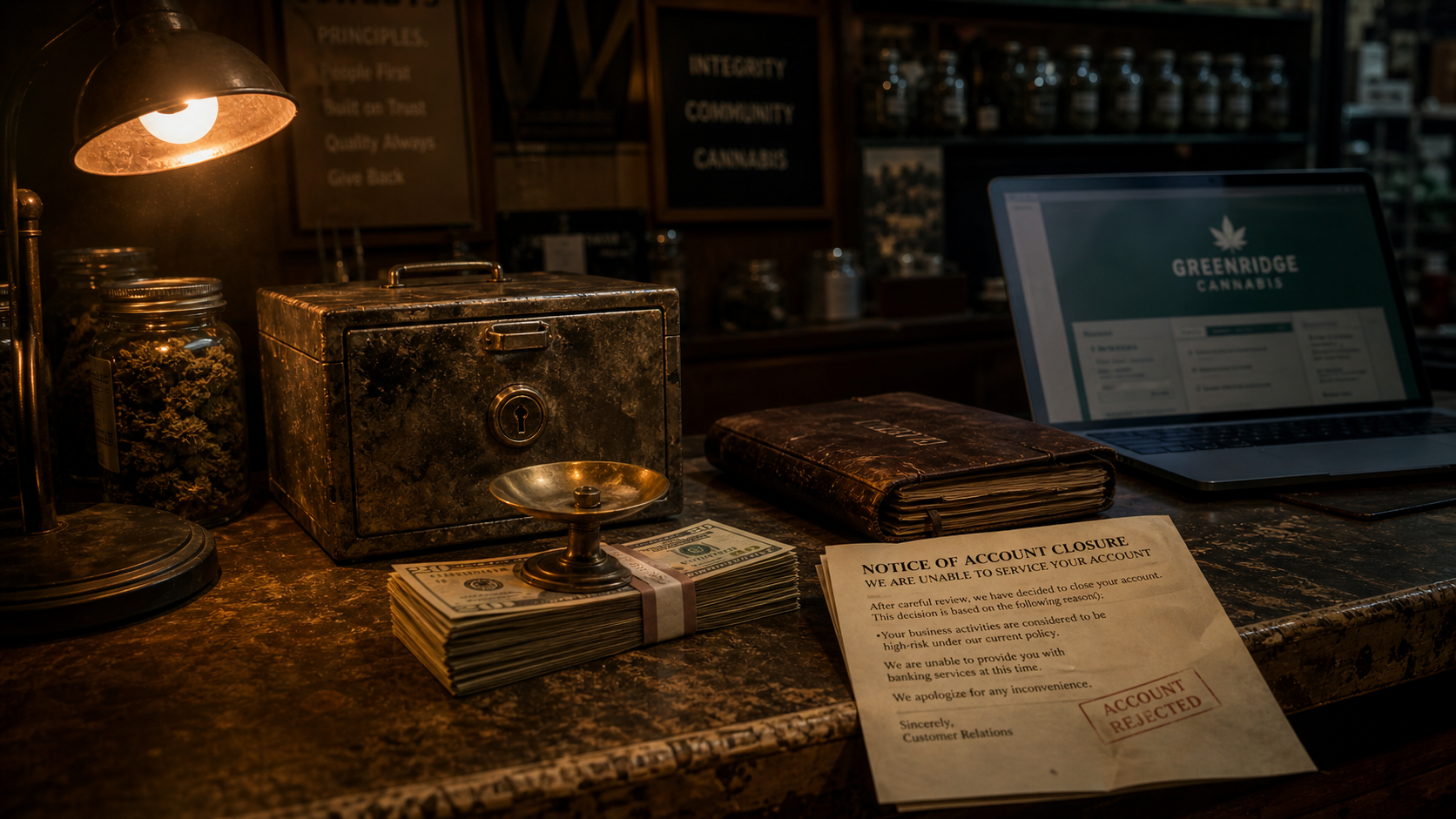
An academic paper in Cannabis and Cannabinoid Research summed it up well: even if rescheduling happens, it's "transitional." The real work — banking reform, interstate commerce, social equity — needs separate federal legislation. Schedule III changes a DEA classification. It doesn't fix cannabis banking or build the regulatory framework the industry actually needs.
The fight for real federal reform is longer than rescheduling. Always has been.
States in the Game: Who's Still Moving
While federal gears grind, states keep moving.
Hawaii has SB 3275 advancing — low-dose cannabis at 5mg per serving, a conservative start but movement. New Hampshire's HB 186 passed the House 208 to 135, only to get blocked in the Senate again. Pennsylvania has SB 120 and HB 20 pending; HB 1200 passed the full House in 2025 by a single vote (102-101). Wisconsin has 14 of 15 Democratic senators sponsoring SB 1045. Tennessee has SB 809 in play. West Virginia is pursuing SJR 5, a constitutional amendment route.
Florida is notably off the 2026 board — the ballot initiative was blocked on March 11. That removes the biggest potential state-level vote of the year. But seven states still in play is real movement, and even partial wins build the infrastructure for full legalization later.
Slow, uneven, frustrating — but moving.
Solana, Crypto, and Why Weedcoin Lives Here
SOL is in the $80 to $90 range this week. The SEC has officially classified SOL as a digital commodity — a significant marker for institutional adoption and regulatory clarity. Spot Solana ETFs have drawn $1.45 billion in cumulative inflows. Stablecoin supply on Solana crossed $17 billion. Real-world asset value on-chain hit an all-time high near $1.85 billion.
The upcoming Alpenglow upgrade is targeting sub-150 millisecond transaction finality — down from a current baseline of around 12 seconds. That would make Solana faster than most traditional payment rails.
This is why Weedcoin lives here. Speed, low cost, genuine institutional momentum, and a developer ecosystem that builds through every market cycle. As cannabis legalization expands and the industry's need for banking and payment infrastructure grows, fast and cheap commodity-classified blockchain rails are going to matter.
Twenty-seven days to 4/20. Eight days to the one-year anniversary of Weedcoin's launch on April 1, 2025. The community has held through a complicated regulatory environment for cannabis and a volatile crypto market. That's what holders do.
The Bigger Picture
Here's what ties all of this week's news together: institutions catching up to reality.
The Lancet is running large-scale cannabis reviews. The CRS is recalibrating forecasts to reflect actual conditions on the ground. States are advancing legislation that would have been politically impossible ten years ago. The SEC is classifying Solana as a commodity. The NIH is funding CBD research.
Progress in 2026 is grinding, incremental, and spread across a half-dozen directions at once. It's not a single dramatic moment. It's a slow tide.
The science is catching up to what patients have known for years. The regulatory infrastructure is moving — slowly — in the right direction. The blockchain rails are getting faster and cheaper.
The tide is moving.
Stay connected with the Weedcoin OG community:
Website: https://www.weedcoinog.com
Follow us on X: https://x.com/weedcoinog
Chat With Wiz (GPT): https://bit.ly/ChatWithWeedcoin
Contract Address: 21nnfR4TkbZNLwvRrqEseAbz7P3kxKjaV7KuboLJpump
Like bitcoin but way higher 🌿