From Wall Street to Medicare and Cannabis Still Waits on the Feds
Everyone is taking cannabis seriously now except the people who are supposed to be in charge
Something happened last week that should have been front page news.
Two members of Congress, one Republican and one Democrat, introduced a bill that would let state-legal cannabis businesses list on the New York Stock Exchange and Nasdaq. Not a theoretical framework. Not a study or a committee hearing. An actual piece of legislation called the CLIMB Act that would allow cannabis companies to trade on the same exchanges as Apple and Tesla.
At the same time, the Centers for Medicare and Medicaid Services confirmed it is finalizing rules for a pilot program that would cover CBD products for Medicare recipients. Starting as early as April. With a reimbursement of up to $500 per year. Products would be allowed to contain trace amounts of THC.
And in Virginia, a bill to legalize recreational cannabis sales starting January 1, 2027, is sitting on Governor Abigail Spanberger's desk right now. She is expected to sign it. Virginia would become the 25th state with a legal adult-use market.
These are three separate signals from three separate corners of American policy, and they are all saying the same thing. Cannabis is being taken seriously by Wall Street, by the federal health system, and by state governments. The only place it is not being taken seriously is at the one agency that was told to finish the job three months ago.
The CLIMB Act and What It Actually Does
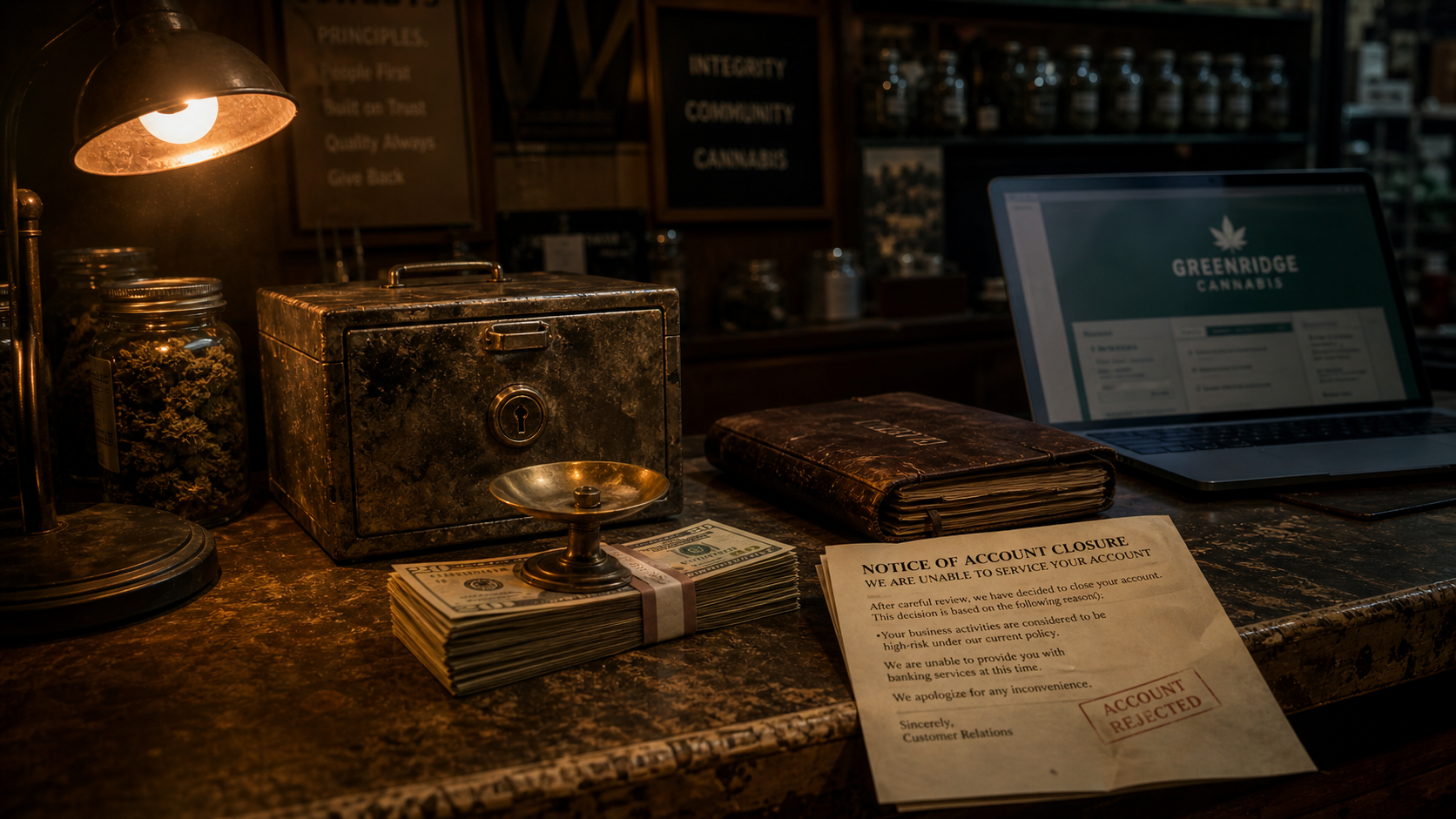
Representatives Guy Reschenthaler from Pennsylvania and Troy Carter from Louisiana filed the Capital Lending and Investment for Marijuana Businesses Act last week. The bill would do more than just allow stock exchange listings. It would provide legal protection for any company that offers financial, accounting, insurance, advertising, legal, compliance, packaging, transportation, or information technology services to state-legal cannabis businesses.
That is a massive list. Right now, banks, insurers, and service providers either avoid the cannabis industry entirely or operate in a legal gray area that creates friction at every level. A cannabis business that wants to list on Nasdaq today cannot because the exchange would risk federal penalties for facilitating a business tied to a Schedule I substance.
The CLIMB Act does not deschedule cannabis. It does not legalize anything. What it does is remove the punishment for treating cannabis like a legitimate industry. And it does it with bipartisan support.
This is the same approach that the SAFER Banking Act has taken for years but could never get across the finish line. The CLIMB Act is narrower and more focused, which could make it easier to move. Whether it actually moves is another question. The 117th Congress saw an earlier version of this bill filed and it went nowhere. But the landscape has shifted. Rescheduling is pending. Public support is at record highs. And the financial industry is tired of leaving money on the table.
Virginia Becomes the 25th State
The Virginia cannabis retail bill cleared the House 64-32 and the Senate 21-18, mostly along party lines. It establishes a 6 percent state cannabis tax with localities allowed to add 1 to 3.5 percent on top. The total tax rate would land somewhere between 12 and 16 percent including existing sales tax.
The bill caps retail licenses at 350 statewide. Existing medical cannabis pharmacies can convert to adult-use for a $10 million fee. Adults 21 and older could purchase and possess up to 2.5 ounces, up from the current 1 ounce possession limit.
Forty percent of the state cannabis tax revenue goes to early childhood care and education. Thirty percent goes to the Cannabis Equity Reinvestment Fund. Revenue projections estimate more than $400 million annually over the first five years.
Governor Spanberger is reviewing the bill now. She has publicly supported a legal retail market. Her predecessor, Republican Glenn Youngkin, vetoed a similar effort. The fact that this bill made it through both chambers with those margins tells you where Virginia is heading.
January 1, 2027 would be the launch date. Virginia has been in what lawmakers call "marijuana purgatory" since legalization passed in 2021 — possession is legal but there is no legal way to buy it. That gap has fueled exactly the kind of unregulated market the bill is designed to replace.
Medicare Meets Cannabis
Here is where it gets interesting. The CMS pilot program would allow Medicare recipients to access CBD products with a doctor's recommendation. Reimbursement up to $500 per year. Products would need to come from a legally compliant source, undergo third-party testing, and comply with state and local laws.
Dr. Mehmet Oz, the CMS administrator, has said the goal is to launch in April. The program would operate only in states where hemp-derived products are legal. And here is the detail that matters most — products would be allowed to contain up to 3 milligrams of THC.
That number creates a direct conflict with the federal hemp definition change signed by President Trump in November 2025. That law caps total THC at 0.4 milligrams per container for hemp-derived products starting November 12, 2026. So the federal government is simultaneously saying Medicare can cover CBD products with up to 3 milligrams of THC while another federal law says any product with more than 0.4 milligrams of THC per container is no longer hemp.
These two policies cannot coexist as written. Something has to give. Either the hemp definition gets delayed or amended, the CMS pilot carves out an exception, or the entire framework collapses under its own contradictions. The Hemp Planting Predictability Act would delay the enforcement date to 2028, but it has not moved.
234 days until that enforcement deadline. The clock is running.
Ohio and the Cost of Inaction
Meanwhile, Ohio just demonstrated what happens when the system moves too fast for the people to keep up.
The Ohioans for Cannabis Choice campaign needed more than 248,000 valid signatures from at least 44 of the state's 88 counties to place a referendum on the ballot that would have repealed Senate Bill 56. That law, signed by Governor Mike DeWine, effectively bans most intoxicating hemp products in the state. The original bill carved out hemp-infused beverages, but DeWine used a line-item veto to strip that exception.
The signature campaign fell short. They ran out of time. The truncated collection period made it nearly impossible to hit the numbers across enough counties. As of last week, the law is moving forward. Hemp beverage companies like Fifty West Brewing have filed lawsuits, but the regulatory environment in Ohio has turned hostile.
The DEA, in a report published last week, acknowledged that legal cannabis markets have not increased youth use. That data point has been debated for years, and now the agency tasked with enforcing federal drug law is confirming what the research has shown repeatedly. Legalization does not lead to more kids using cannabis. The Wall Street Journal ran a piece trying to connect teen access to legalization anyway. The data does not support it.
Where We Actually Are
There is a version of this story where everything lines up. Cannabis companies trade on Nasdaq. Seniors get their CBD covered by Medicare. Virginia opens 350 retail stores. Ohio reverses course. The feds finish rescheduling.
And there is the version we are living in, where each of those things is happening in isolation, often in direct contradiction with other federal actions, and nobody seems to be coordinating any of it.
That is the real story. Not that progress is happening. Progress has been happening for a decade. The story is that progress keeps happening despite the system, not because of it. Every gain is won by campaigns collecting signatures, by lawmakers negotiating until midnight, by communities showing up when the process is designed to exhaust them.
Crypto understands this pattern. Bitcoin did not wait for regulators to decide it was legitimate before building an ecosystem. Solana did not wait for institutional approval before its developer community showed up. The builders build. The culture holds. And the institutions catch up eventually, usually after the builders have already solved the problems the institutions were supposed to address.
Weedcoin sits at that intersection every single day. Cannabis culture. Crypto community. The daily practice of building something real while the world around it figures out how to categorize what is already happening.
28 days to 4/20. 9 days to the one-year anniversary. The countdown does not stop and neither does this community.
Stay connected with the Weedcoin OG community:
Website: https://www.weedcoinog.com
Follow us on X: https://x.com/weedcoinog
Chat With Wiz (GPT): https://bit.ly/ChatWithWeedcoin
Contract Address: 21nnfR4TkbZNLwvRrqEseAbz7P3kxKjaV7KuboLJpump
Like bitcoin but way higher