Live Resin vs Live Rosin: What Actually Hits Different?
What Is the Real Difference Between Live Resin and Live Rosin?
Both start with fresh-frozen flower. The split happens at extraction. Live resin uses a chemical solvent like butane or propane to pull the trichomes off the plant. Live rosin uses heat and physical pressure and zero solvents. Same starting material, two completely different paths, two very different products in the jar. Once you know that one detail, the rest of the concentrate menu suddenly makes sense.
That is the whole answer in plain language. The flavor difference, the price difference, and the cultural difference all come downstream from that one fork in the road.
Why Does Fresh-Frozen Flower Change the Game?
Because terpenes are fragile. Drying and curing flower the traditional way costs you a meaningful chunk of the volatile aromatics that give cannabis its smell, taste, and a real piece of its effect. Freezing the plant within minutes of harvest locks those terpenes in place before they can evaporate. Per Leafly's concentrate glossary, that is the entire point of the word "live" in front of resin or rosin: the starting material was never dried or cured. Everything after that is method.
This is the same conversation we had in the Terpenes Deep Dive blog. Myrcene, limonene, and pinene are the headline terpenes that drive a lot of what people actually feel, and they are exactly the compounds that vanish first when flower sits in a curing room for two weeks. Fresh-freeze, and they stay.
How Are Live Resin and Live Rosin Actually Made?
Live resin is solvent extraction. Frozen flower goes into a closed-loop hydrocarbon system, liquid butane or propane or a proprietary blend is pushed through the plant material at low temperature, the mixture is collected, the solvent is purged off in a vacuum oven, and what is left is a sticky, sauce-like, deep-amber concentrate that sits between a wax and a sauce in texture. Leafly's live resin guide pegs typical retail at around USD 20 to 30 per gram on the low end and USD 50 or more for top-shelf labels.
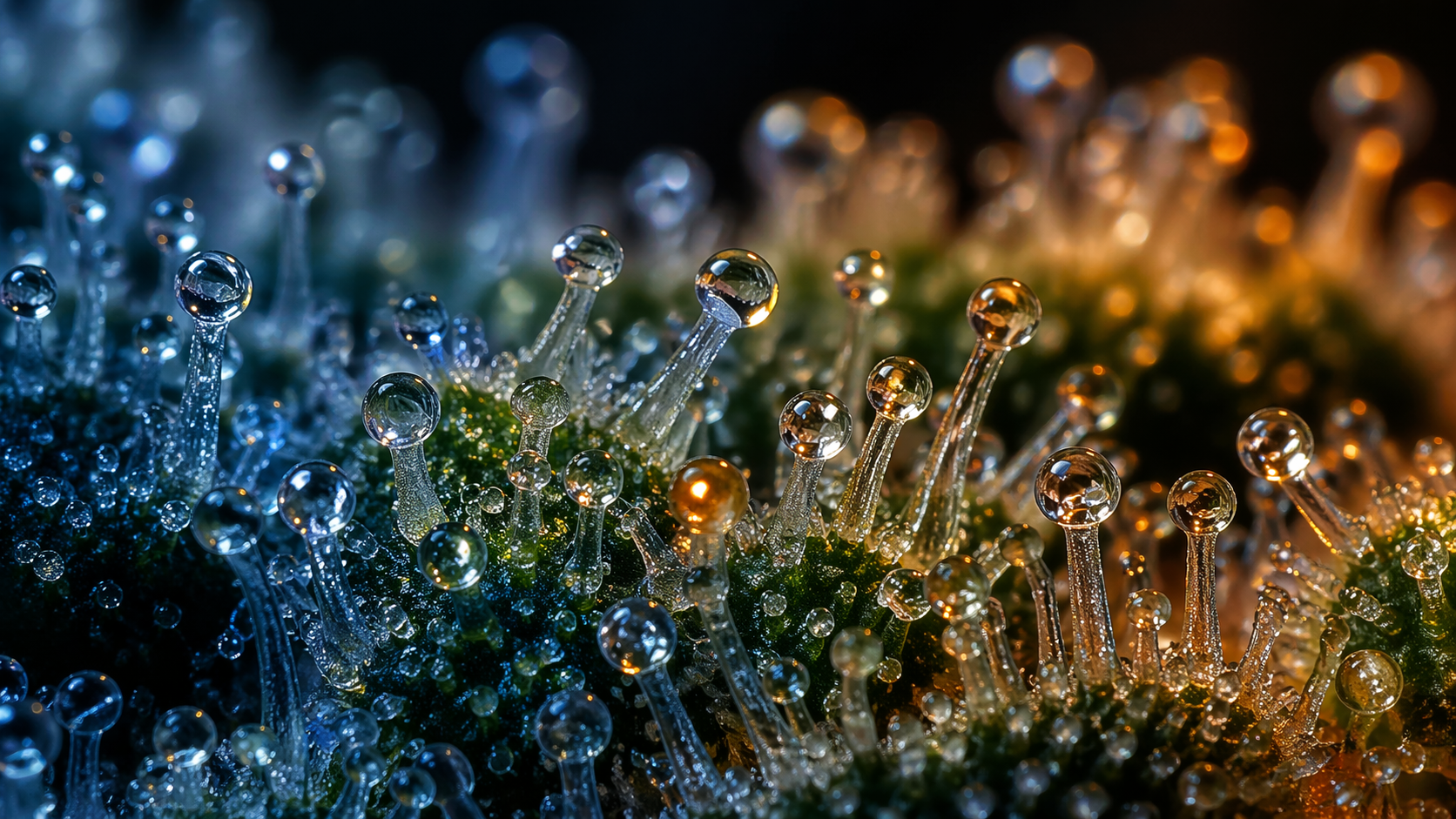
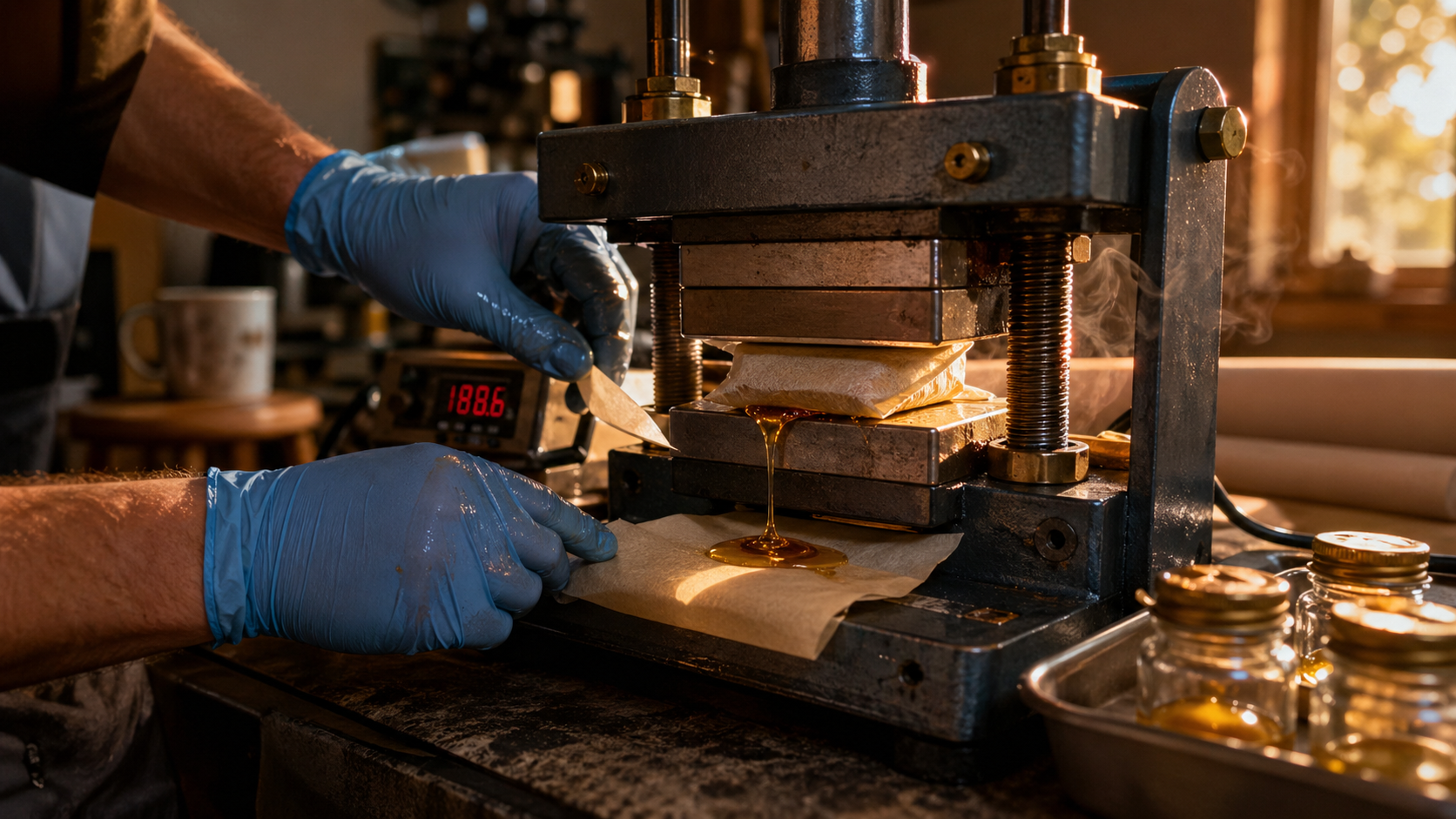
Live rosin is the opposite philosophy. A filter bag full of fresh-frozen flower or, more commonly, ice-water hash made from fresh-frozen flower goes between two heated steel plates in a hydraulic press. Heat plus pressure squeezes the trichome heads until they release their oil. That oil flows out onto parchment paper as live rosin. No butane. No propane. No solvent of any kind. Per High Times, the rosin press technique was refined around 2015 and quietly rewrote the entire solventless category from there.
The look is different too: live rosin runs paler than live resin, often a milky honey or pale gold, with a drier batter or taffy texture instead of a glossy sauce. The trade-off is yield. Solventless takes more starting flower per gram of finished product, which is why a true top-shelf live rosin commonly retails north of USD 60 a gram and the very best cold-cure jars push past USD 100.
Hydrocarbon extraction done right by a licensed extractor with modern closed-loop equipment and verified residual-solvent testing produces a clean product. Done in someone's garage with raw butane, it is the reason High Times keeps running stories about home labs blowing up in places like Spain in April 2026. The professional version of either method is fine. The DIY version of solvent work is not.
Which One Actually Hits Harder?
This is where the marketing gets noisy. Potency on a lab sheet, measured as total THC, is roughly comparable between premium live resin and premium live rosin from the same flower. The real felt difference is the terpene fingerprint. Solvent-based extraction can pull a slightly different terpene mix than a press, and people who chase live rosin almost always describe the experience as more "round," more flavor-forward, and a touch more body-heavy because the full lipid and cannabinoid profile of the trichome travels with it. People who lean live resin tend to want the brighter, sharper, more "bright nose" hit and the easier vape-cart formats it loads into.
Both can be loud. Both can be premium. Neither is automatically "better." The honest answer is that they are different tools.
Here is a small comparison, all of it sourced from Leafly's concentrate guides and the 420 2025 product roundup:
| Spec | Live Resin | Live Rosin |
|------|------------|------------|
| Solvent | Butane, propane, or blend | None |
| Look | Glossy amber sauce or wax | Pale gold batter or taffy |
| Typical price per gram | USD 20 to 50 | USD 40 to 100+ |
| Vape carts | Common and well established | Newer, growing fast |
| Production scale | High | Smaller, more craft |
Live rosin vape carts and disposables exploded across the 2025 market, with brands like 22Red, 710 Labs, Dank Czar, and Happy Cabbage Farms shipping live rosin all-in-ones in Colorado, Washington, Michigan, and Oregon, per Leafly's 420 2025 dab roundup. Live resin disposables from Colorado's Natty Rems and others stayed on top shelves the same season. Both formats are healthy. The shelf is bigger than it used to be.
What Should I Buy First, and How Does This Fit the Bigger Cannabis Story?
The same week the federal government finally moved state-licensed medical cannabis to Schedule III, which we wrote about in Schedule III Is Here, craft extractors were posting six-figure single-strain rosin runs to small-batch menus. That is what a real cultural shift looks like: legal status changing in DC, and at the same time, the actual product on the shelf getting better, cleaner, and more honest about how it was made. There is a clean line from this story back to Hemp Goes Hardware too. Both are about cannabis maturing past the wellness-vs-stoner caricature. Hemp is becoming building material. Concentrates are becoming a craft product.
Three honest takes for the dab counter:
1. If you have never had a true live rosin, try one before you assume you know what concentrates taste like. A single half-gram from a respected solventless brand is worth a night.
2. If you live somewhere with a strong vape-cart market and you want premium flavor in a portable format, a live resin disposable is the easy answer.
3. Read the COA. Both categories should publish residual-solvent and cannabinoid panels. If a brand will not show you the test, that is the answer.
The shelf is loud. The product behind the shelf is honestly excellent right now. Pick the method that matches how you want to consume, and keep paying attention to who is making it.
Stay connected with the Weedcoin community.
Website: https://www.weedcoinog.com
Follow us on X: https://x.com/weedcoinog
Chat With Wiz (GPT): https://bit.ly/ChatWithWeedcoin
Contract: 21nnfR4TkbZNLwvRrqEseAbz7P3kxKjaV7KuboLJpump
Like bitcoin but way higher 🌿