Living Soil 101: Why Top-Shelf Cannabis Starts In The Dirt
What Actually Makes Living Soil Different From Regular Dirt?
Living soil is dirt that is alive — a working ecosystem of bacteria, fungi, worms, and microscopic arthropods that feeds a cannabis plant the way nature actually feeds a plant. It is the opposite of pouring blue salt fertilizer into inert coco coir. The grower feeds the soil, the soil feeds the plant. That is the entire model, and it is why almost every elite outdoor harvest in the legacy market was grown this way long before anyone called it a category.
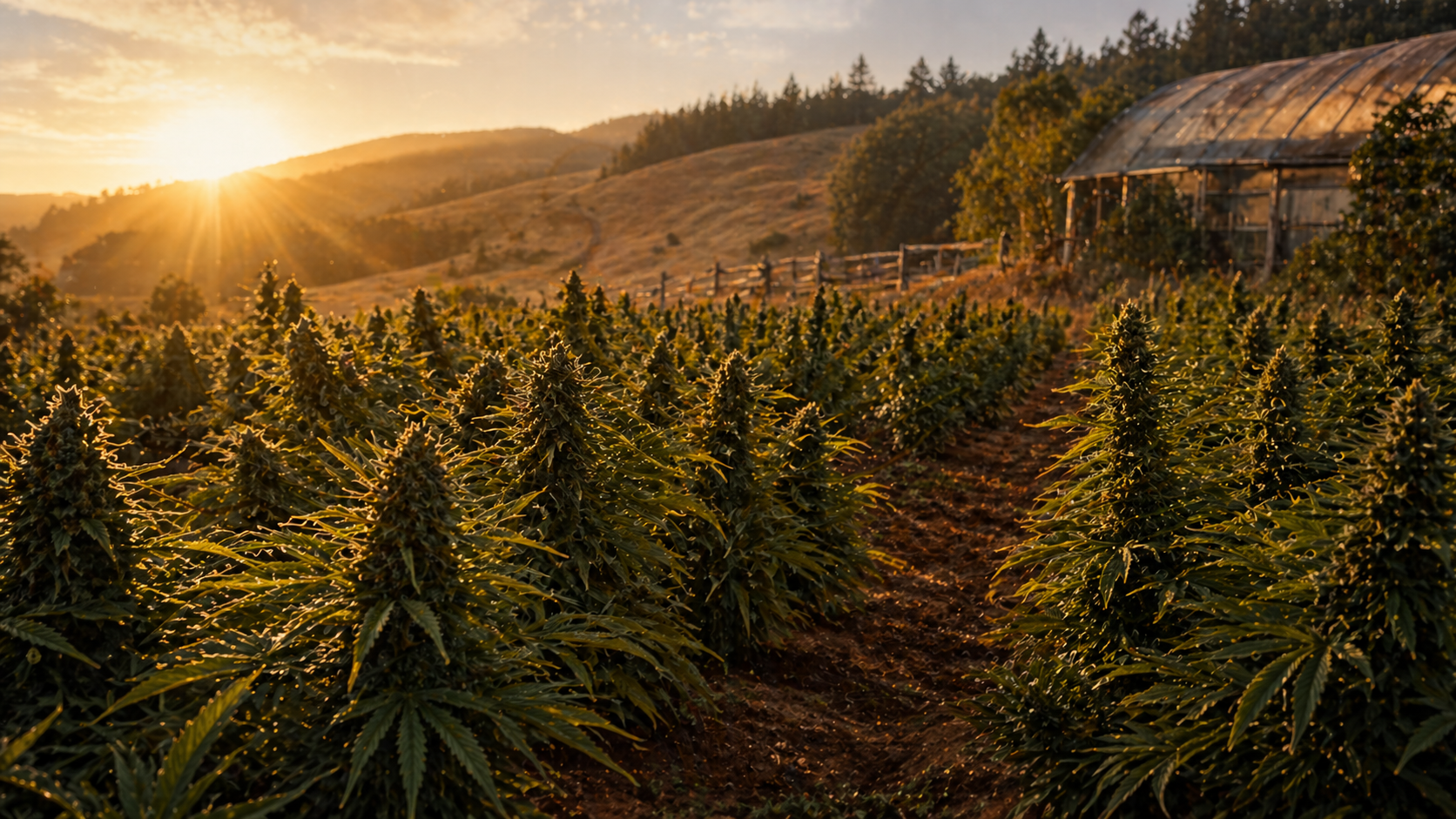
I stood in a Trinity County hoop house last October with a grower who would not stop talking about earthworms. Not strains. Not lights. Worms. Every flower in his cure room was loud in a way the bottle-fed gardens down the road simply were not. The terps hit before he opened the jar.
This is the Saturday Grow primer. What living soil is, how it works, what it does to the finished flower, and why the science is finally catching up to what hash-makers have been saying for twenty years.
How Is Living Soil Different From Salt-Based Hydroponics?
Most large indoor cannabis is grown in coco coir, rockwool, or plain hydro and fed bottled synthetic nutrients. Those work. They produce big yields and predictable results. But by definition every bottled nutrient is a salt — an inorganic compound that dissolves in water — and salts kill soil microbes the way ocean water kills a thirsty animal.
Soil scientist Dr. Elaine Ingham, who built the Soil Food Web framework most living-soil growers reference, has spent decades pointing out that bottled fertilizers deliver mostly nitrogen while a healthy plant needs phosphorus, sulfur, potassium, zinc, iron, and trace minerals. An imbalanced diet turns the growing medium into dead dirt that has to be replaced every cycle.
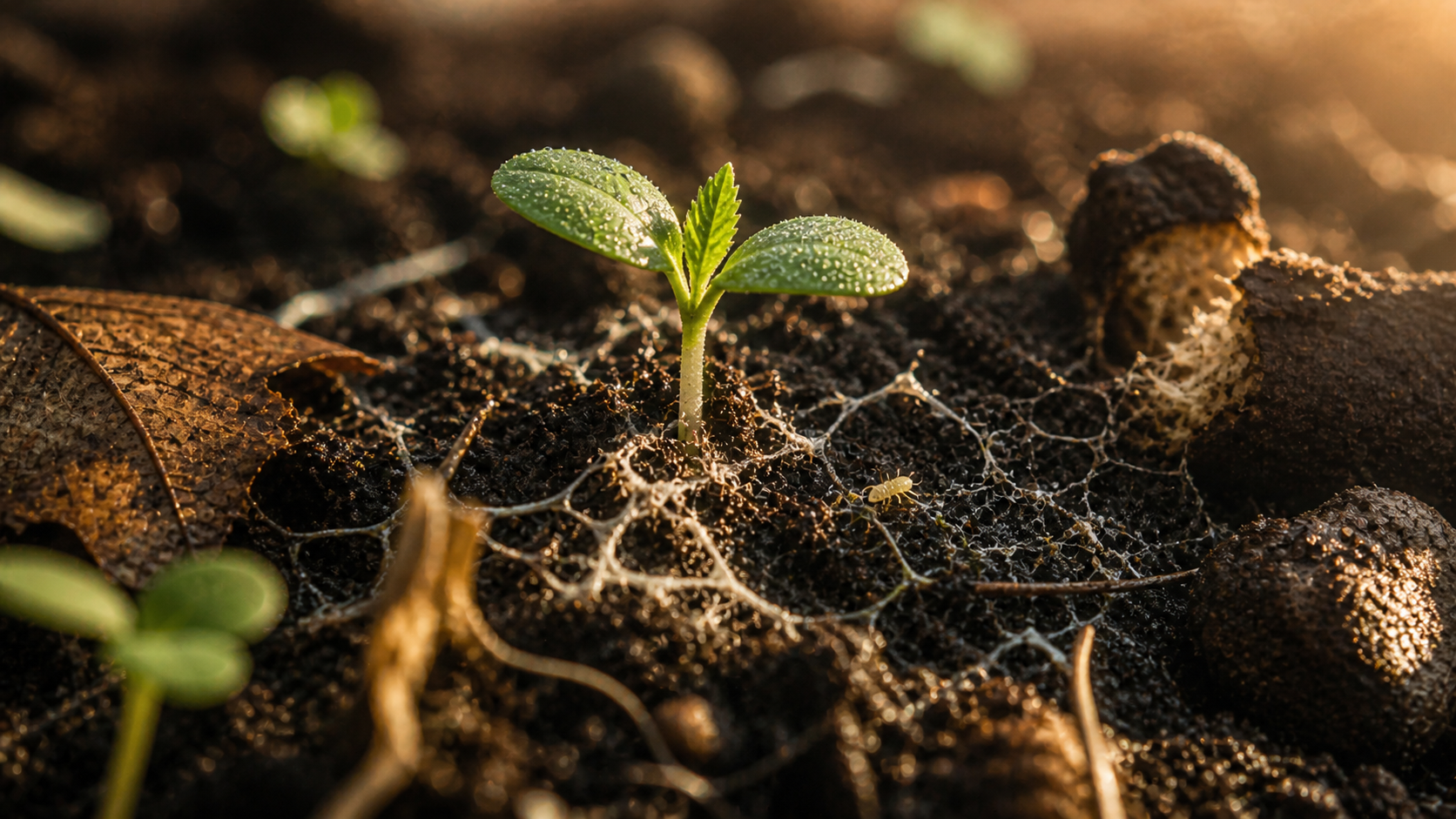
Living soil flips the model. Instead of feeding the plant directly, you build a soil ecosystem — compost, worm castings, cover crops, mycorrhizal fungi, beneficial bacteria, mineral amendments — and let the microbes deliver nutrients in plant-available forms. Done well, the same bed runs harvest after harvest. The Long Beach crew at No-Till Kings recycles every bit of last year's plant material — leaves, stems, roots — back into the bed as mulch for next year's crop.
Does Living Soil Actually Grow Better Cannabis?
Yes, and 2025 is the year the federal research started catching up to the field. A federally-funded study published in the Journal of Medicinally Active Plants compared two hemp cultivars grown in side-by-side fields — one conventional tilled with synthetic inputs, one no-till with cover crops — and found significant chemical differences in the finished flower (Marijuana Moment, October 8, 2025).
The study, summarized by Marijuana Moment, found:
- CBG was 3.7x higher in plants grown with cover crops
- THC was up to 6x higher in plants from the conventionally tilled field
- CBD differences flipped depending on cultivar — Tangerine produced 1.5x more CBD in tilled soil; CBG Stem Cell produced 2x more CBD in cover-crop soil
The takeaway the researchers wrote into the paper is the part most people have not absorbed yet. Quoting the study: "Poor soil quality appears to result in higher levels of THC production, whereas higher soil quality may result in higher levels of the precursor cannabinoid, CBG." That is a quietly enormous sentence. It says the cannabinoid profile of cannabis is not just genetic — it is shaped by the soil it was grown in.
A separate Columbia University collaboration with cannabis farmers, summarized on Leafly, found outdoor living-soil cannabis carried significantly greater cannabinoid diversity and terpene quantity than indoor hydroponic cannabis from the same genetics. The terps in the jar are not just a strain. They are a soil signature.
What Goes Into A Living-Soil Bed?
The recipe varies by region, but the core building blocks are consistent. A first-year living-soil bed usually starts something like this:
1. A high-quality base soil — peat or coconut-coir blend, with enough drainage that roots breathe
2. Compost and worm castings — the source of biology and slow-release nitrogen
3. Aerated minerals — pumice, lava rock, or rice hulls — so the bed never compacts
4. A mineral amendment package — kelp meal, neem meal, crab meal, basalt rock dust, gypsum, oyster shell flour — each contributing different micronutrients
5. Cover crops planted between cycles — clover, vetch, buckwheat — that fix nitrogen and feed the microbes when there is no cannabis in the bed
6. Mulch on top — straw, leaves, or chopped-up plant material from last year's harvest
Once the bed is built, the grower waters with plain water and occasional compost teas — a brewed liquid full of beneficial bacteria and fungi — and lets the microbes do the rest. Some growers add JADAM-style microbial solutions, the simplified Korean natural farming approach Sol Spirit Farm in Trinity County uses to power their entire regenerative operation, profiled by Leafly in October 2025.
Once a no-till bed is alive, it is a self-improving system that gets better year after year.
Why Does Living-Soil Cannabis Smell Louder?
Plants make terpenes for defense and communication — to ward off insects, attract pollinators, and signal stress to their neighbors. A plant grown in a sterile coco bag fed synthetic nitrogen has very little to react to. A plant grown in living soil is constantly negotiating with thousands of microbial species, defending against minor pest pressure, and pulling a wider mineral menu out of the root zone.
That negotiation is where terpenes come from. The plant has more to say because the environment gave it more to react to. This is why the Emerald Triangle outdoor sun-grown harvest — covered in our prior post Sun-Grown vs Indoor: The Outdoor Cannabis Renaissance — keeps quietly winning competitions despite indoor flower carrying higher posted THC numbers.
A grower in Mendocino put it to me cleaner than any textbook ever has — "indoor builds a number, outdoor builds a profile." That sentence is the entire pitch for living soil.
Can You Run Living Soil Indoors Or In A Backyard?
Yes. Indoor no-till living-soil grows have produced championship-quality cannabis for years, especially in California and Colorado craft programs. The build is more involved up front — you need a fabric pot or raised bed deep enough to support a real soil ecosystem, usually 25 gallons or larger — but the cost-per-harvest comes way down after the first run because you are not buying soil or bottled nutrients again.
In a backyard outdoor setting, May is your starting line in most of the U.S. The Leafly grower's almanac calls Mother's Day the traditional planting day for the northern hemisphere — final container, inoculated with beneficial bacteria and fungus, irrigation laid, compost tea applied to stimulate soil life. If you started seeds indoors in March, those young plants are ready to go into the bed right around now.
A few practical 2026 notes for new growers:
- Check your state and local plant-count laws before you put a single seed in the ground
- Test your soil pH — cannabis prefers a 6.0 to 7.0 range
- Mulch heavy on day one and never let bare soil sit in the sun
- Resist the urge to feed bottled nutrients in week three — the soil is doing its job
Federal Schedule III reclassification, covered in our recent post Schedule III Is Here: What Reclassification Actually Changes, did not legalize home growing — that is still a state-by-state question. But the cultural and scientific tailwind behind craft and regenerative cultivation is the strongest it has been in a generation.
FAQ
Is living soil the same as organic?
Not exactly. Organic refers to a certification standard around inputs. Living soil refers to the biology of the growing medium itself. A grow can be living soil and not certified organic, or certified organic and not living soil — but most living-soil growers also operate organic by default.
How long does a living-soil bed last?
Properly maintained no-till beds run for many years. Some Emerald Triangle growers are working soil that has been in continuous cycle for over a decade, getting better with each harvest.
Does living soil cost more than bottled nutrients?
First year, yes — the up-front amendment cost is real. After that, no. The bed feeds itself with cover crops, mulch, compost teas, and recycled plant material. The cost curve flips fast.
Stay connected with the Weedcoin community:
Website: https://www.weedcoinog.com
Follow us on X: https://x.com/weedcoinog
Chat With Wiz (GPT): https://bit.ly/ChatWithWeedcoin
Contract Address: 21nnfR4TkbZNLwvRrqEseAbz7P3kxKjaV7KuboLJpump
Like bitcoin but way higher 🌿