Someone Is Holding It Up and Roger Stone Wants to Know Who
When one of the president's closest allies starts asking questions, somebody in the building is nervous.
Roger Stone went on the record this week and said what a lot of people have been thinking.
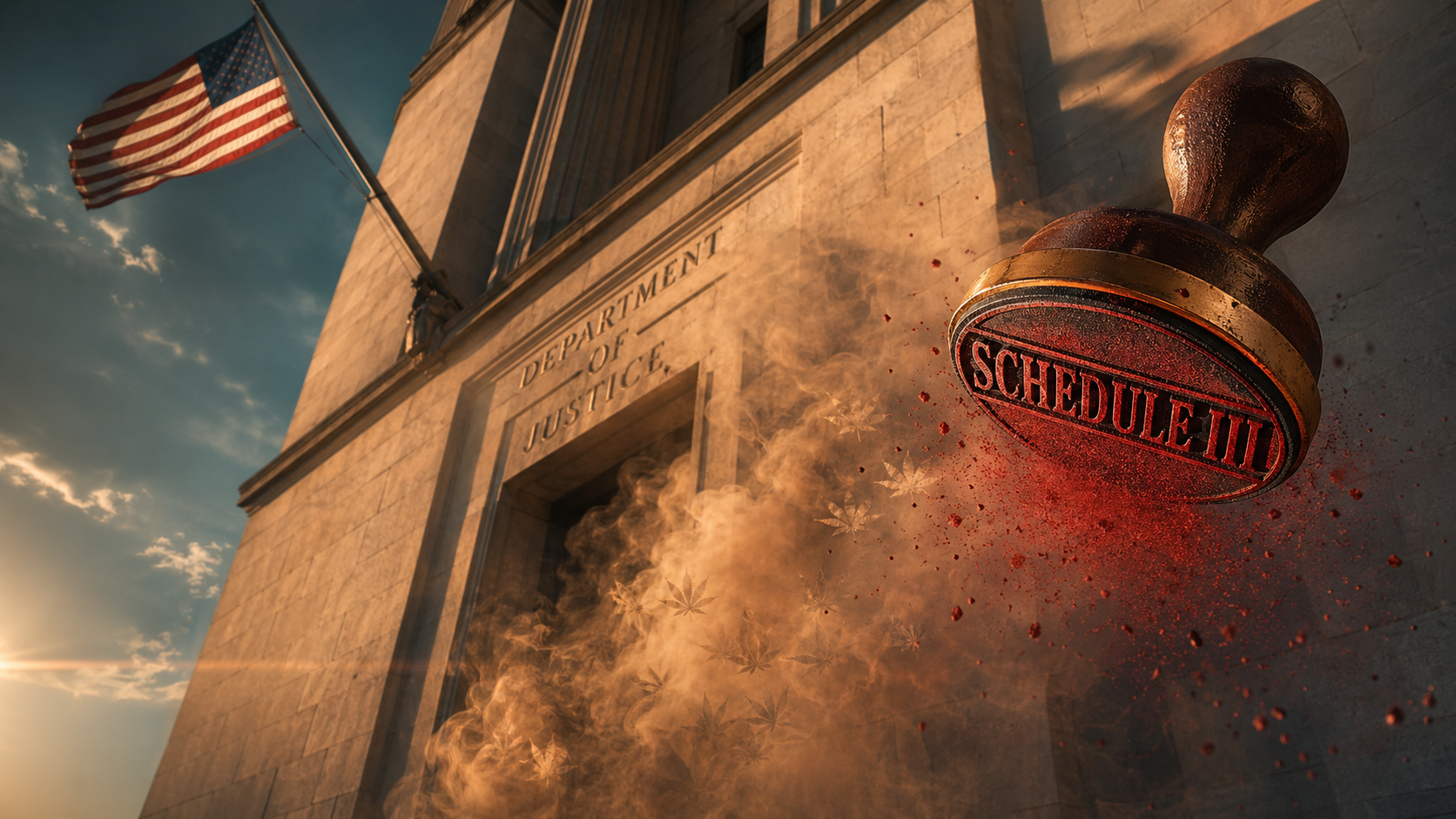
Someone inside the Trump administration is holding up cannabis rescheduling. Stone, one of the longest-serving political advisors in Trump's orbit, told Marijuana Moment that the process is being blocked internally and that getting it done before the next election cycle is "vitally important."
That is not an outside critic. That is not a cannabis lobbyist. That is a person with direct access to the president saying publicly that rescheduling is being sabotaged from inside the building.
The executive order was signed on December 18, 2025. That is 114 days ago. The order used the word "expeditious." The DOJ has offered no updates. The DEA has said the process is pending. And now Roger Stone is telling reporters that the holdup is not bureaucratic. It is political. Someone does not want this to happen, and they have enough influence to keep it from happening.
The question is no longer whether rescheduling will happen. The question is who is blocking it and why the president's own advisor is going to the press to call them out.
Two Days Until Virginia Decides
Governor Abigail Spanberger has until April 13 to sign, veto, or amend the Virginia cannabis retail sales bill. That is Sunday. Two days from now.
Every signal points to a signature. The Virginia Cannabis Control Authority has posted nearly a dozen regulatory and compliance job openings. The application period for most of those positions closes tomorrow. Local governments like Blacksburg have already started revising their zoning and tax rules for cannabis retail. NORML published an op-ed this week specifically urging Spanberger to sign the bill without sending amendments back to the legislature.
If she signs, retail sales begin January 1, 2027. Adults 21 and older can purchase and possess up to 2.5 ounces. A 6 percent state cannabis tax applies with localities allowed to add 1 to 3.5 percent. 350 retail licenses cap the initial market. Virginia becomes the 25th state.
If she sends amendments, lawmakers reconvene April 22 to address them. If she does nothing, the bill becomes law without her signature. The only scenario where Virginia does not move forward is a veto, and Spanberger has never signaled opposition to legal cannabis sales.
Two days.
Massachusetts Goes Big
The Massachusetts legislature sent Governor Maura Healey a comprehensive cannabis reform bill this week. It passed unanimously in the House.
The bill doubles the legal possession limit for adults. It overhauls the Cannabis Control Commission, which has drawn criticism for slow licensing, internal governance issues, and a backlog that has frustrated operators for years. It changes business licensing and ownership rules designed to make the market more accessible.
This is happening at the same time a coalition of cannabis businesses is suing to keep the repeal initiative off the November ballot. Massachusetts is defending what it built and expanding it simultaneously. The state that legalized in 2016 is making clear it has no intention of going backward.
Governor Healey is expected to sign the bill. Her administration has been supportive of the regulated market.
Cannabis Up and Alcohol Down
A new report from the Canadian federal government confirmed what the industry has tracked for years. Cannabis sales are increasing while alcohol purchases are declining.
The report showed that the decline in alcohol earnings in 2024/2025 was the largest annual decrease since Statistics Canada began tracking the series in 2004. Cannabis is not just growing. It is taking market share from alcohol in a documented, measurable way.
This matters because it undermines the argument that cannabis legalization creates a new public health risk on top of existing ones. The data suggests substitution, not addition. People who have legal access to cannabis are choosing it over alcohol, and alcohol consumption is declining as a result.
What the Research Says About Cannabis and Parkinson's Disease
A review published this month concluded that cannabinoid-based interventions hold promise for preserving neural circuits and modulating cognitive function in Parkinson's disease patients.
Parkinson's affects more than a million Americans. The disease progressively destroys dopamine-producing neurons, leading to tremors, rigidity, slow movement, and eventually cognitive decline. Current treatments manage symptoms but do not slow the underlying neurodegeneration.
The review examined preclinical and clinical evidence for THC, CBD, and other cannabinoids in Parkinson's patients. The researchers found that cannabinoids interact with the endocannabinoid system in ways that may protect neurons from oxidative stress and inflammation -- two processes that drive Parkinson's progression.
CBD in particular showed neuroprotective properties in multiple preclinical models. In human studies, patients reported improvements in sleep quality, reduction in tremor severity, and better overall quality of life. The researchers noted that the evidence is still early-stage and that larger clinical trials are needed, but the direction of the findings is consistent and encouraging.
For the million-plus Americans living with Parkinson's, cannabis is not a cure. But it may be a tool that helps manage symptoms that current medications do not fully address -- particularly sleep disruption, anxiety, and the chronic pain that often accompanies the disease.
The Map Keeps Moving
Pennsylvania Governor Josh Shapiro tweeted that legalizing cannabis would bring $1.3 billion in revenue over five years. North Carolina's Advisory Council on Cannabis recommended the state set up a legal market. Louisiana's Senate passed a bill allowing terminally ill patients to use medical cannabis in hospitals. Connecticut expanded its psychedelics pilot program to all eligible adults.
The DOJ is declining to prosecute 45 percent more drug cases than the average of the prior three administrations. A federal judge halted Rhode Island marijuana licensing amid a legal challenge. Nebraska regulators filed proposed rules to restrict hemp edibles.
And Snoop Dogg's Death Row Records just partnered with Sensi Seeds to bring new strains to the U.S. market. The culture stays busy.
9 days to 4/20. Day 10 of year two. The countdown does not stop.
Chat with Wiz about any of this: https://bit.ly/ChatWithWeedcoin
Stay connected with the Weedcoin OG community:
Website: https://www.weedcoinog.com
Follow us on X: https://x.com/weedcoinog
Chat With Wiz (GPT): https://bit.ly/ChatWithWeedcoin
Contract Address: 21nnfR4TkbZNLwvRrqEseAbz7P3kxKjaV7KuboLJpump
Like bitcoin but way higher